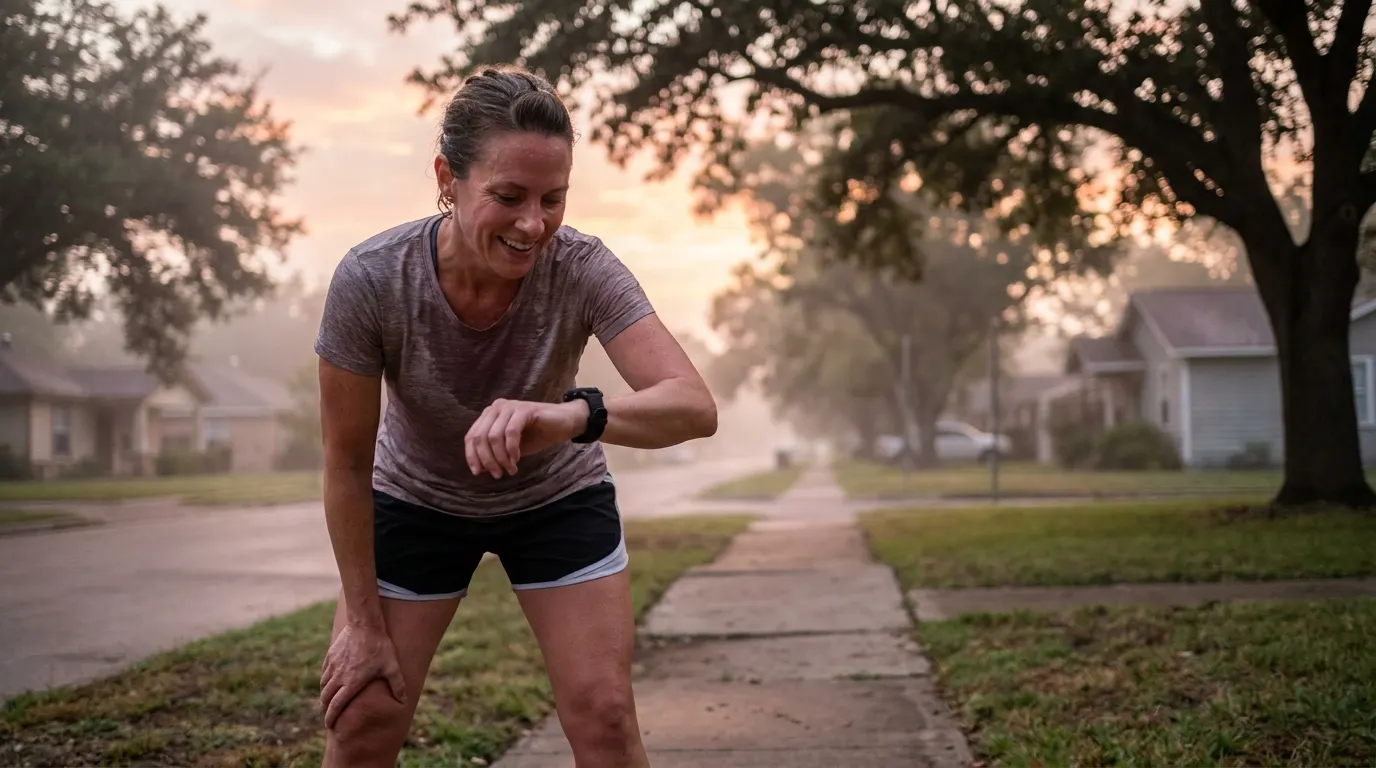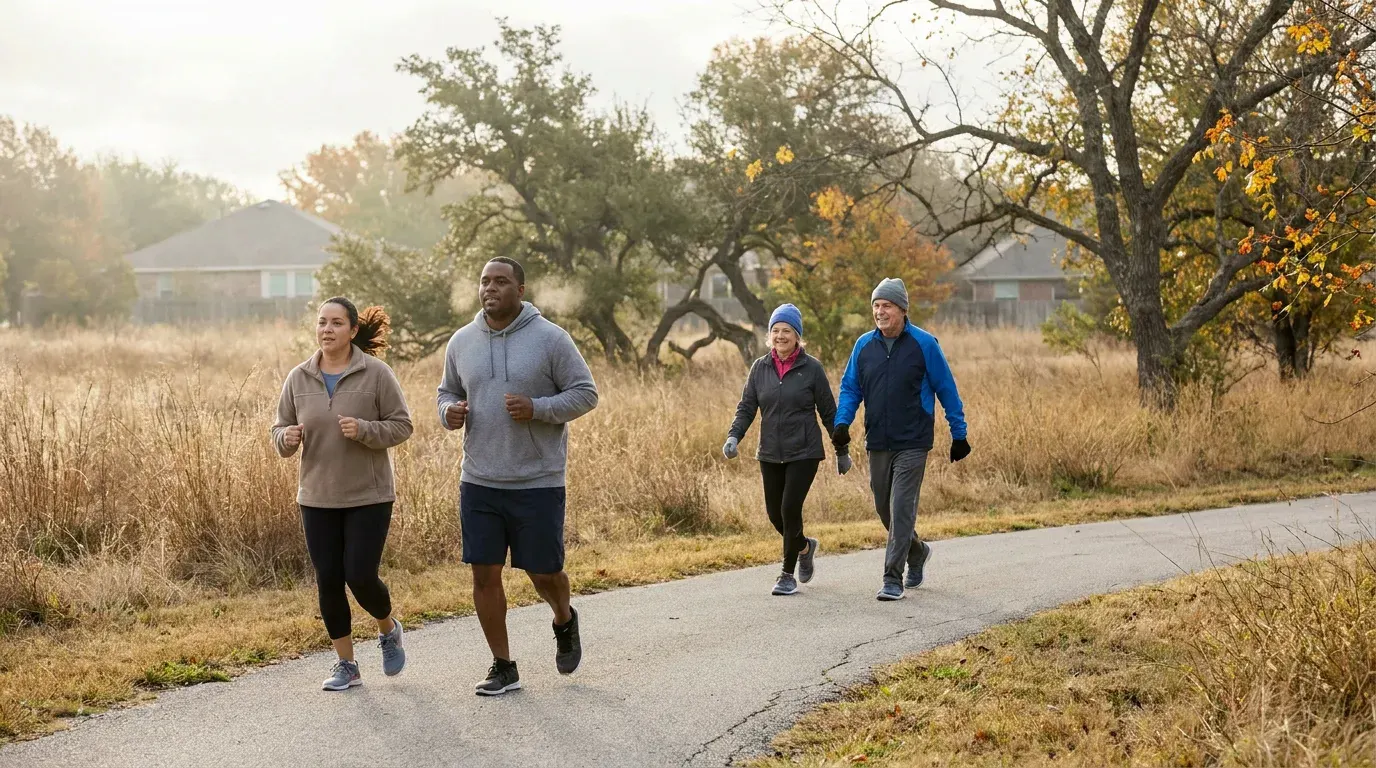
The short version: Run-walk means taking planned walk breaks from the first mile, not waiting until you are forced to. In a randomized marathon study, run-walkers finished in about the same time as runners who never walked and reported less muscle pain and fatigue. Garmin’s September 22 update added run/walk workouts to its Run Coach plans. With Thanksgiving turkey trots about two months away, now is a good time to start.
What the research found
In 2016, researchers led by Kuno Hottenrott at Martin Luther University Halle-Wittenberg published a randomized trial in the Journal of Science and Medicine in Sport. They split 42 non-elite runners (22 men and 20 women) into two groups for a marathon: one ran the whole way, the other used a run/walk strategy.
- Finish times were similar: 4:14:25 on average for run/walk, 4:07:40 for running only. The difference was not statistically significant.
- Run/walk hurt less: the run/walk group reported less muscle pain and fatigue after the race.
- Heart strain was the same: both groups had the same temporary rise in cardiac stress markers, which returned to normal within four days. The authors concluded that run/walk doesn’t reduce cardiovascular load, but it lets non-elite runners reach similar times with less discomfort.
It is one study of 42 people, but it matches what many coaches and first-time marathoners report.
Why it suits Texas especially
Planned walk breaks lower your effort for a moment and give you a natural time to drink. That helps on the warm fall mornings Texas races often get. Our guide to running in Texas heat explains why effort climbs so fast in humidity. Walk breaks also spread the load on your legs, which matters on long, hard Texas roads.
How to start
- Pick a ratio you can repeat. New runners often start at 2 to 4 minutes of running and 1 minute of walking. Experienced marathoners often walk briefly at every mile or every aid station. The right ratio is one you could hold from the first interval to the last.
- Walk early, before you need to. The breaks work because they come before fatigue does. Walking only when you are wiped out is not the same strategy.
- Walk briskly. Short steps with your arms swinging keep you moving well and make it easier to start running again.
- Use a timer. Most GPS watches can alert you on each interval. If you have a Garmin fēnix 8, Forerunner 570 or 970, Venu 4 or vívoactive 6, the September update adds run/walk workouts to Run Coach plans. See our watch roundup.
- Race the same way you train. Don’t switch strategies on race day.
Races to aim for this fall
- Turkey trots: Thanksgiving is Thursday, November 26. Find one near you in the November race guide or on the Texas 5K calendar. Many offer a walk or a shorter fun run too.
- A first 10K: the Texas 10K calendar lists holiday 10Ks through December.
- A first half or full: Dallas and San Antonio in December, or Austin and Cowtown in February. Check course time limits on each race’s site. Our registration roundup has dates and status for each.
A specialty running store is a good first stop for a shoe fitting. Find one in the Texas running store directory.
General information, not medical advice. Check with a doctor before starting a new exercise program, especially in heat.